

Why Version Control System Exist : Software Development Before and After Git
A beginner-friendly explanation of how software development evolved before and after Git, and why version control systems became essential.
Introduction
Let’s go back to the days before April 2005, when software development looked very different from today. Developers often worked in a sequential manner, where one person wrote code while the rest of the team waited. New features were added one after another, usually by a single developer at a time. The code was commonly stored on pendrives or even floppy disks and shared manually between team members. This approach was slow, inefficient, and highly error-prone due to heavy dependency on a single resource.
Software Development Before Version Control
Before version control systems existed, software development relied heavily on manual coordination between team members. Developers usually shared code by copying files and sending them through pendrives, floppy disks, or emails. There was no proper system to track changes, so understanding what was modified and when was extremely difficult. If a bug appeared, teams often struggled to identify which change caused the issue. As projects grew, this unstructured approach made collaboration slow and risky.
The Pendrive Analogy in Software Development
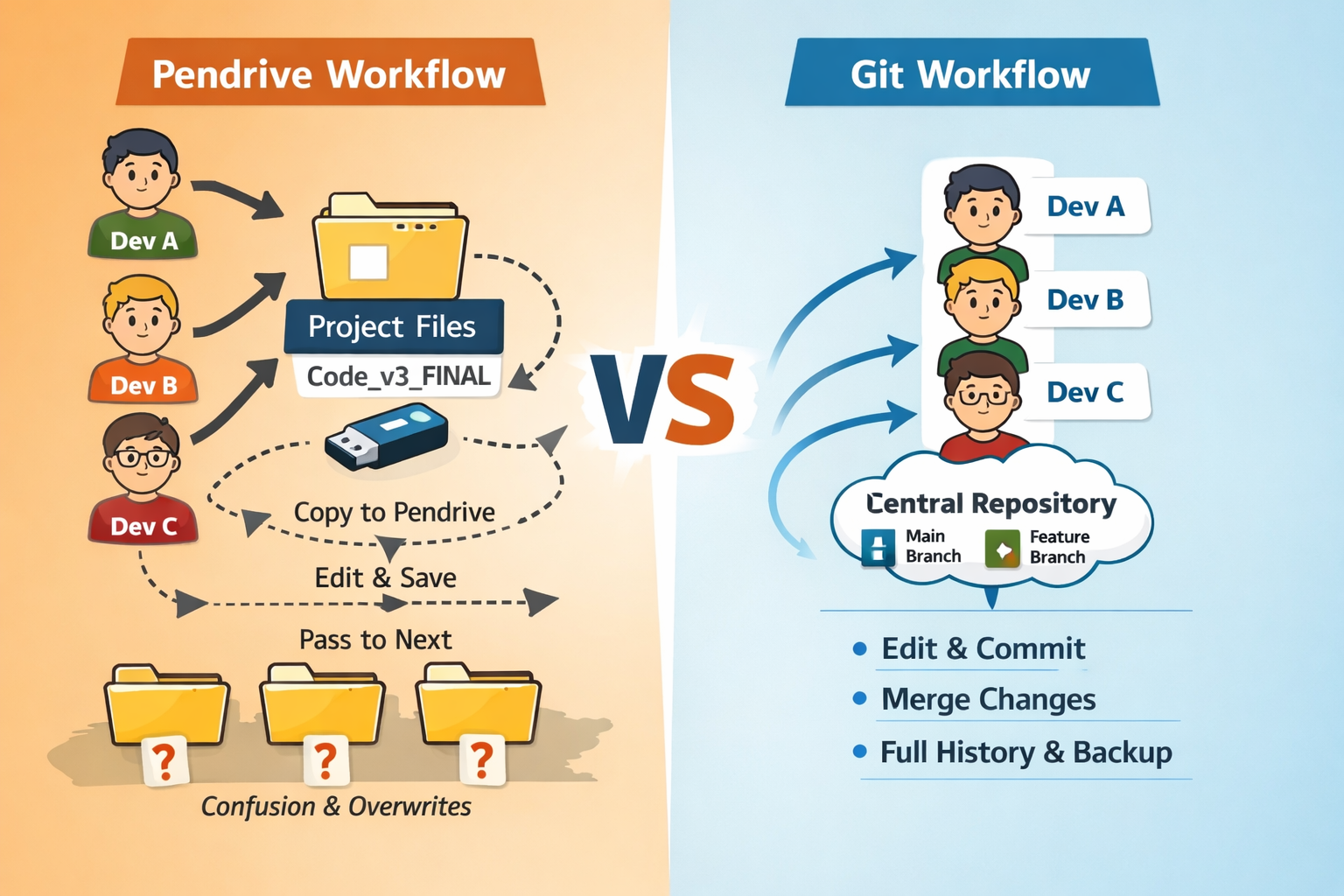
The pendrive analogy clearly explains how developers worked before version control systems. A developer would copy the project into a pendrive, make changes, and rename the folder to something like “final” or “final_v2.” The same pendrive would then be passed to another developer, who might overwrite existing changes without realizing it. Over time, multiple versions of the same project existed, and no one knew which one was correct. This manual workflow often resulted in confusion, lost work, and wasted effort.
Problems Developers Faced Without Version Control Systems
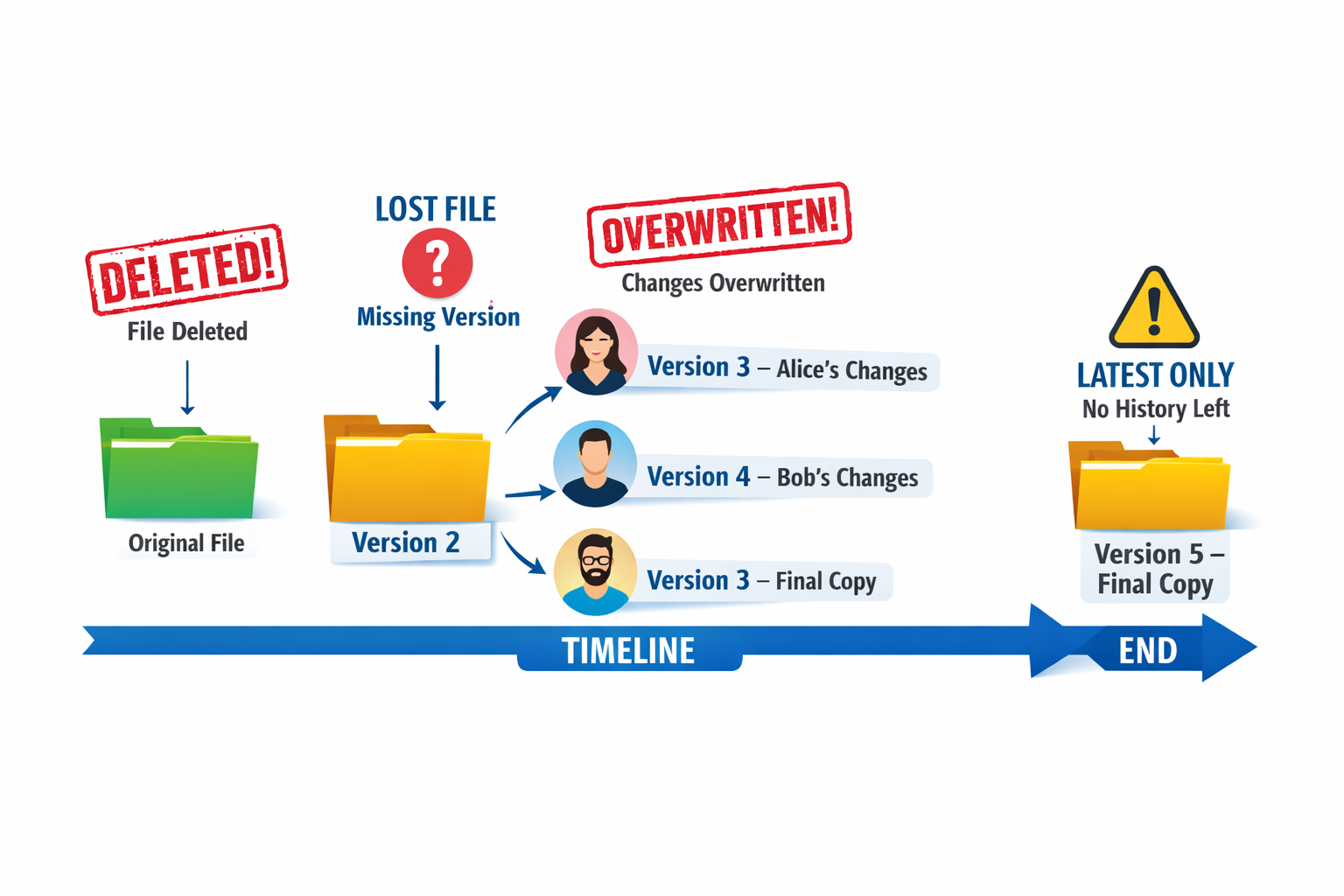
Working without version control created several challenges for developers. Code changes were frequently overwritten by others, and older working versions were easily lost. There was no way to track who made a specific change or why it was done. Collaboration became difficult as multiple developers could not safely work on the same codebase. Fixing bugs was time-consuming because there was no history to refer back to. Overall, development became stressful and unreliable.
How Version Control Changed Software Development
Version control systems completely changed how software was built and managed. Instead of manually sharing files, developers could store their code in a centralized repository. Every change was recorded, making it easier to understand what was modified and when. Teams could work on the same project without interfering with each other’s work. This brought structure, transparency, and confidence into the development process.
Software Development After Git
After Git became widely adopted, software development became more organized and collaborative. Developers could work on different features simultaneously without worrying about breaking the main codebase. Every update was saved with a clear history, making it easy to review or undo changes if something went wrong. Collaboration across teams and locations became smoother and more reliable. Git allowed developers to focus more on building features instead of managing files.
Before Git vs After Git
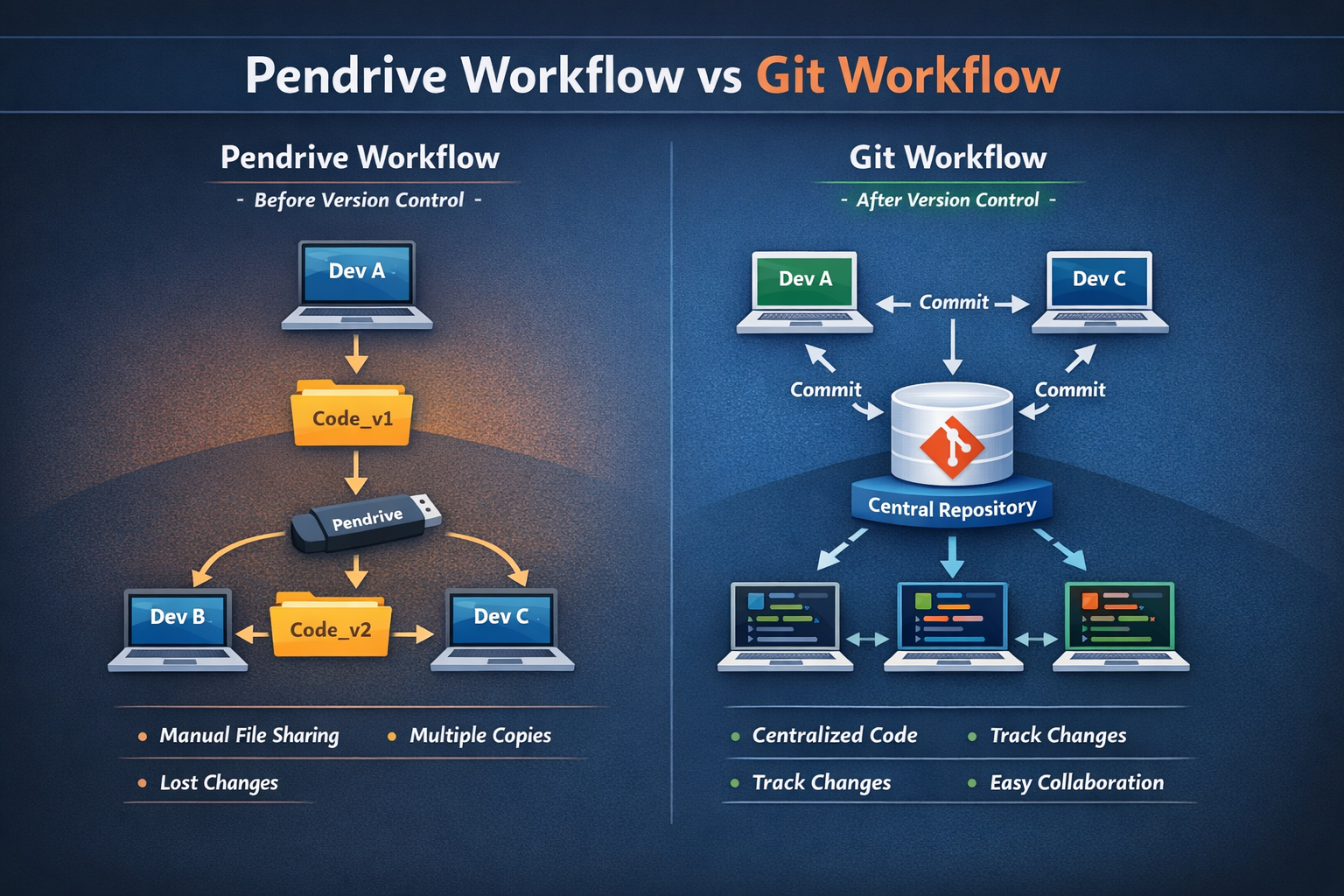
Before Git, development was mostly manual, risky, and dependent on individual developers. Code sharing involved physical devices or emails, and mistakes were difficult to recover from. After Git, development became automated, secure, and team-friendly. Changes could be tracked, reviewed, and rolled back when needed. The difference clearly shows how version control transformed software development into a structured and scalable process.
Why Version Control Became Mandatory
As software projects grew in size and complexity, version control systems became essential rather than optional. Modern applications require large teams to work together, often from different locations. Without version control, managing such collaboration would be nearly impossible. Version control ensures stability, accountability, and faster development cycles. This is why it is now a fundamental part of modern software engineering.
Conclusion
Software development has evolved significantly from the days of pendrives and manual file sharing. The challenges faced before version control systems highlighted the need for a better way to manage code changes. Git and other version control systems solved these problems by enabling safe collaboration and change tracking. Today, it is difficult to imagine building reliable software without version control. It has become a cornerstone of modern development practices.

